
The island and castle seem inseparable from the shore, but they tell different stories. Blejski otok is a place of pilgrimage approached across the water. Blejski grad is a fortified place on the rock, with courtyards, collections and a panorama. Visiting both makes sense when you want to understand these two perspectives, rather than simply accumulate the lake’s best-known sights.
Give the crossing and the ascent their own space. Our suggested order below is an editorial route narrative, not a timetable: the actual boat arrangement and open access determine the day. A shore lunch between the visits is useful both geographically and mentally. You leave one small world, return to the town and water, then climb into another. If your time or energy fits only one, the choice can still make a very satisfying day.
A route detail worth checking
Official notice checked 24 October 2026: the footpath from the parish church, lake and Rowing Promenade to the castle is closed from 6 October until approximately 30 October 2026. Use the official access guidance; after this period, verify the updated notice rather than assuming reopening.
Check the official information ↗Choose by experience, not by the postcard
Choose the island if the approach across the water matters to you. Its appeal is intimate: the arrival steps, church buildings and changing views back towards the shore. Choose the castle if you want the lake laid out below you and a stronger introduction to local history. Neither is a substitute for the other, but neither needs to be compulsory simply because both appear in photographs.
For a family or group, make this choice before buying anything. Somebody interested in church heritage may want a longer island visit; somebody who enjoys objects and workshops may linger at the castle. The two visits can share one lake day, but the sum of their attractions is not the same as the total time needed. Crossings, landings, uphill approaches and a proper break fill the gaps.
Understand what makes a pletna distinctive
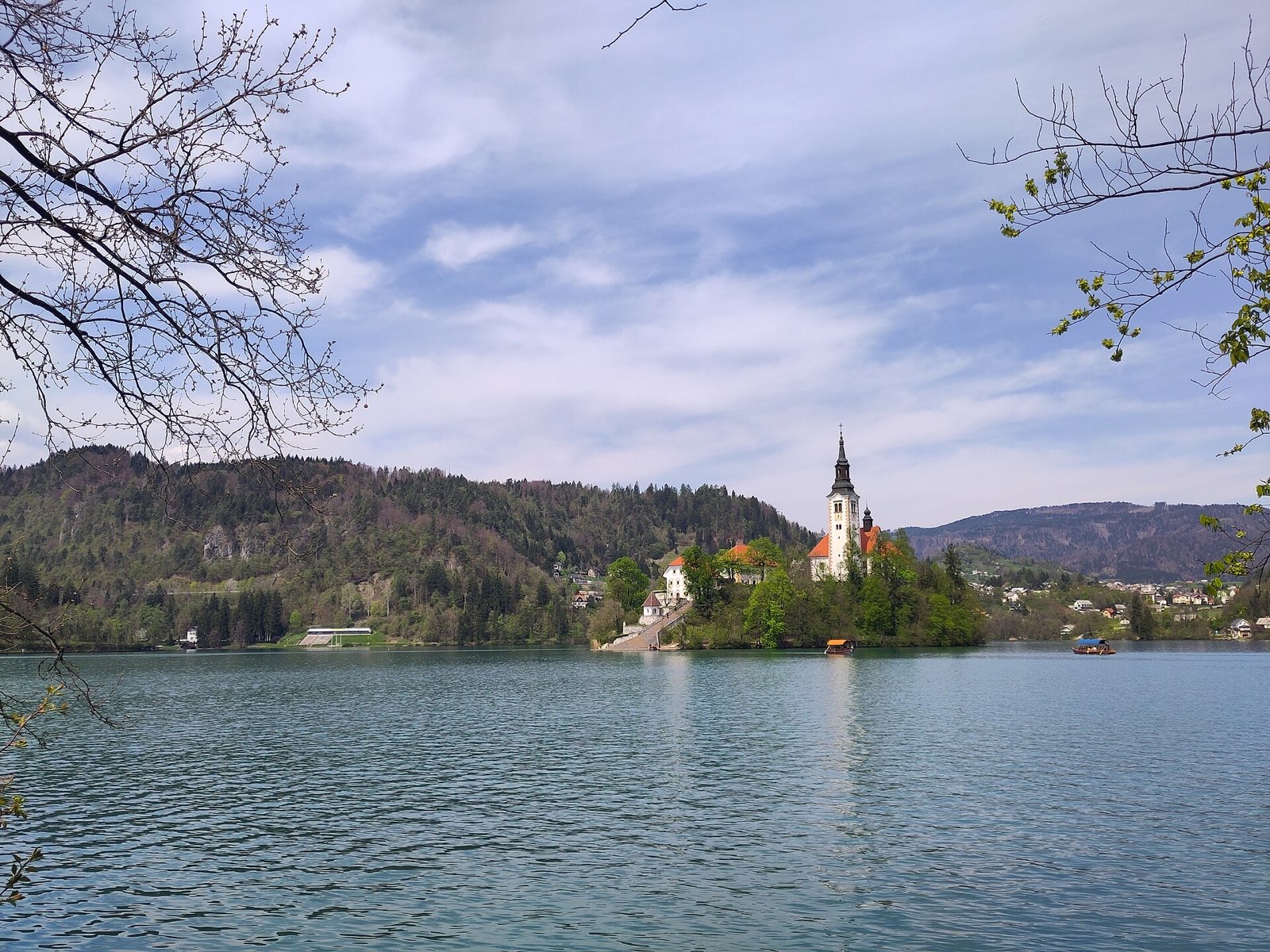
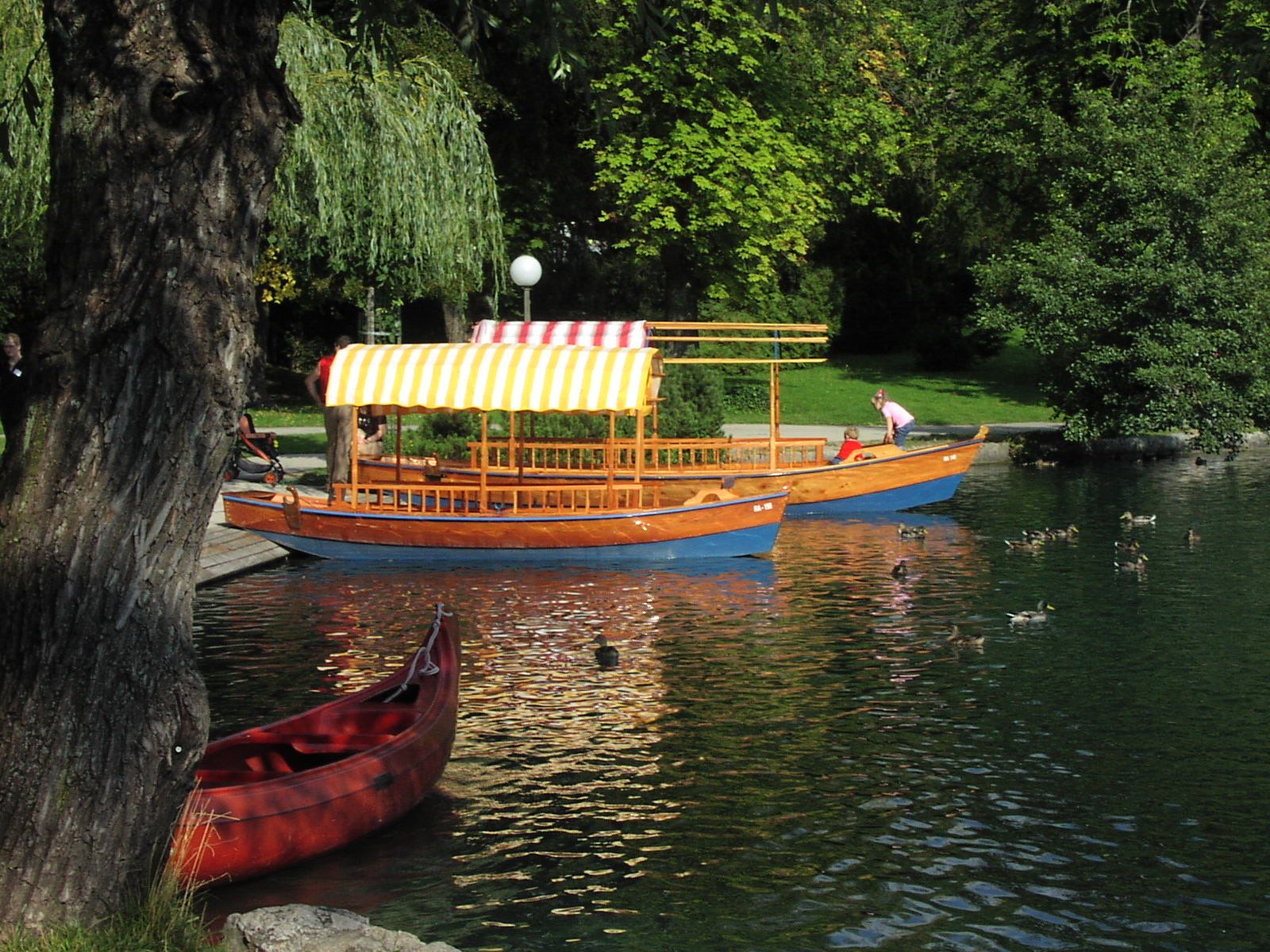
A pletna is a wooden boat rowed by an oarsman standing at the rear. The skills of building and using these boats are recorded in Slovenia’s register of intangible cultural heritage. That makes the crossing part of a continuing local practice, not a themed reconstruction. Look at the way the boat is handled and how the people, shore and island remain in view throughout the approach.
The destination tourism material identifies landings including Kazina, Mlino, Vila Bled and Velika Zaka. Choose a landing that fits your walk rather than assuming every boat leaves from the town centre. Discuss departure and return at the landing: the traditional service should not be treated as an ordinary bus with an invented fixed frequency. Electric boat services and authorised rowing-boat options offer different experiences, so compare the actual arrangement rather than only the fare.
When comparing a lake excursion, look specifically for the boat crossing and island admission. A lakeside photo stop does not necessarily include either.
Read the island from its staircases
The well-known southern staircase has 99 stone steps and dates to 1655, according to the island operator. It creates a deliberate transition from landing to the higher church precinct. The island is small, but it is not flat. Look back towards the lake as the shore changes level, rather than treating the stairs only as an obstacle before the main attraction.
Around the church are buildings with older practical roles: housing for clergy, the sexton and pilgrims, rather than a purpose-built sightseeing village. This is useful context for the scale of the place. A compact island can still deserve a thoughtful visit when you understand why people came here. If steps are a concern, resolve access questions with the operator before choosing your crossing, rather than discovering the issue after arrival.
A church landscape with a long memory
The island’s history includes archaeological evidence of early settlement and medieval burial. The operator’s history distinguishes this evidence from the stories told about the place. Its architectural and spiritual centre is the church dedicated to the Assumption of Mary; other buildings developed around the needs of pilgrims. Looking at the group as a whole makes more sense than reducing it to a single bell rope.
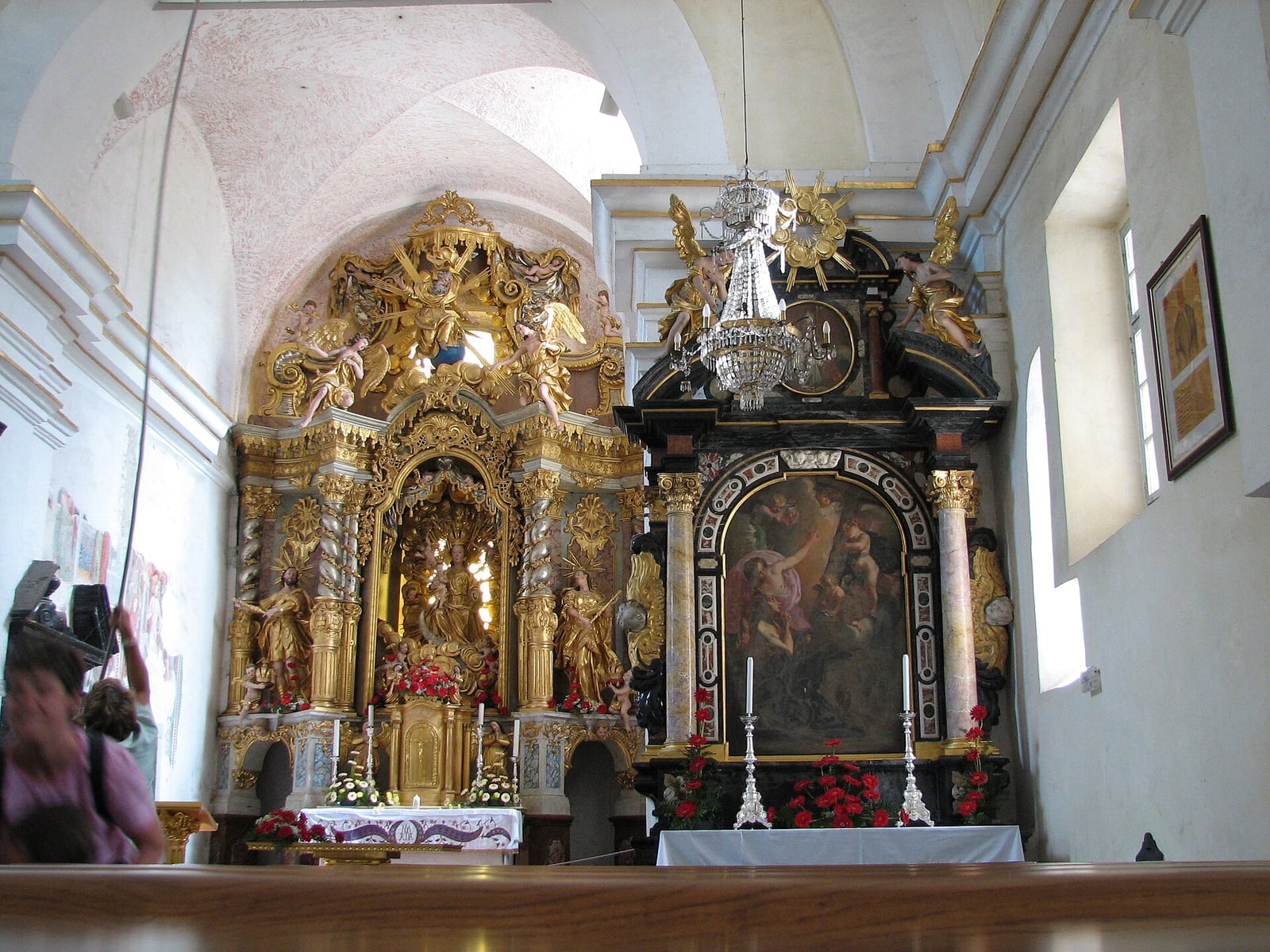
Give the church interior the attention you would give any religious building: look, pause and allow room for worship. This remains a sacred place as well as a visitor attraction. You do not need to share its beliefs to recognise the contrast between the busy shore and a destination shaped by repeated journeys across water. That continuity is part of what makes the island more than its silhouette.
Keep the legend and the history distinct
The island’s wishing-bell legend tells of a widow who commissioned a bell in memory of her husband. A storm sank the boat carrying it; later, the story says, the Pope sent another bell to the island. This is presented as a legend, not an archival account of a shipping accident. Its emotional centre is grief, remembrance and hope, which explains why the act of ringing feels different from a routine museum interaction.
The bell associated with wishes is not simply the same thing as climbing the separate bell tower for a view. Decide which parts of the island interest you and read the current admission options accordingly. A reflective church visit, a tower ascent and a quick circuit make different demands on time. None requires you to promise yourself a wish will come true; the tradition can be appreciated as a living story.
Pause for potica before returning to the shore
Potičnica introduces a different sweet tradition from the cream cake associated with the town. Potica is a festive Slovenian pastry with a rolled filling; the island’s own bakery describes both sweet and savoury versions. It connects the visit to domestic and celebratory food culture rather than another lake photograph. Ask what is available that day instead of expecting one universal filling.
This is a natural point to decide whether you want more island time or are ready for the next part of the day. A snack can bridge the crossing, but leave a proper lunch interval if you also intend to climb to the castle. The island operator describes flexible visit time, yet your practical return still depends on the transport you arranged. Settle that detail before sitting down, so the pause feels like a pause.
If the southern lake setting appeals, use Vila Bled as one comparison point. Confirm your chosen room and access arrangements; the hotel name alone does not promise a view.
Return to land, then make the ascent its own chapter
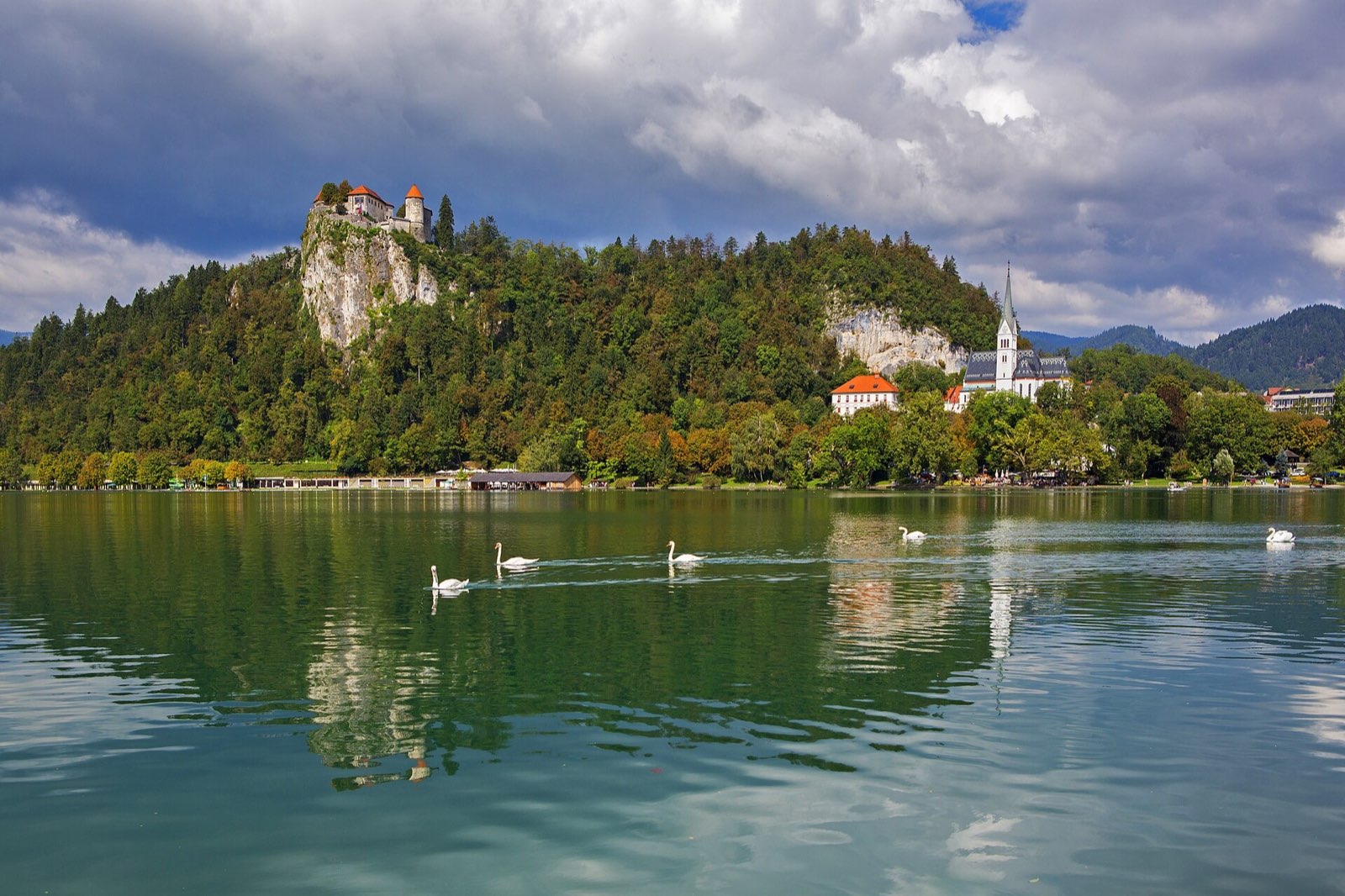
After the island, give yourself a shore interval rather than trying to connect directly to a timed castle slot. The castle occupies a rock above the water, so the approach is part of the visit. Those walking from town should think in terms of ascent and descent, while road arrivals should identify the correct arrival and parking arrangement. A taxi or car does not make the interior automatically step-free.
At the research check on 24 October 2026, the official site carried a temporary closure of the footpath from the parish church, lake and Rowing Promenade, scheduled from 6 to approximately 30 October 2026. This is a dated access notice, not a permanent route description. Follow the official current access guidance, including after the expected end date. For planning, keep the museum visit and the approach as separate blocks rather than allocating one hurried hour to everything.
Look beyond the medieval silhouette
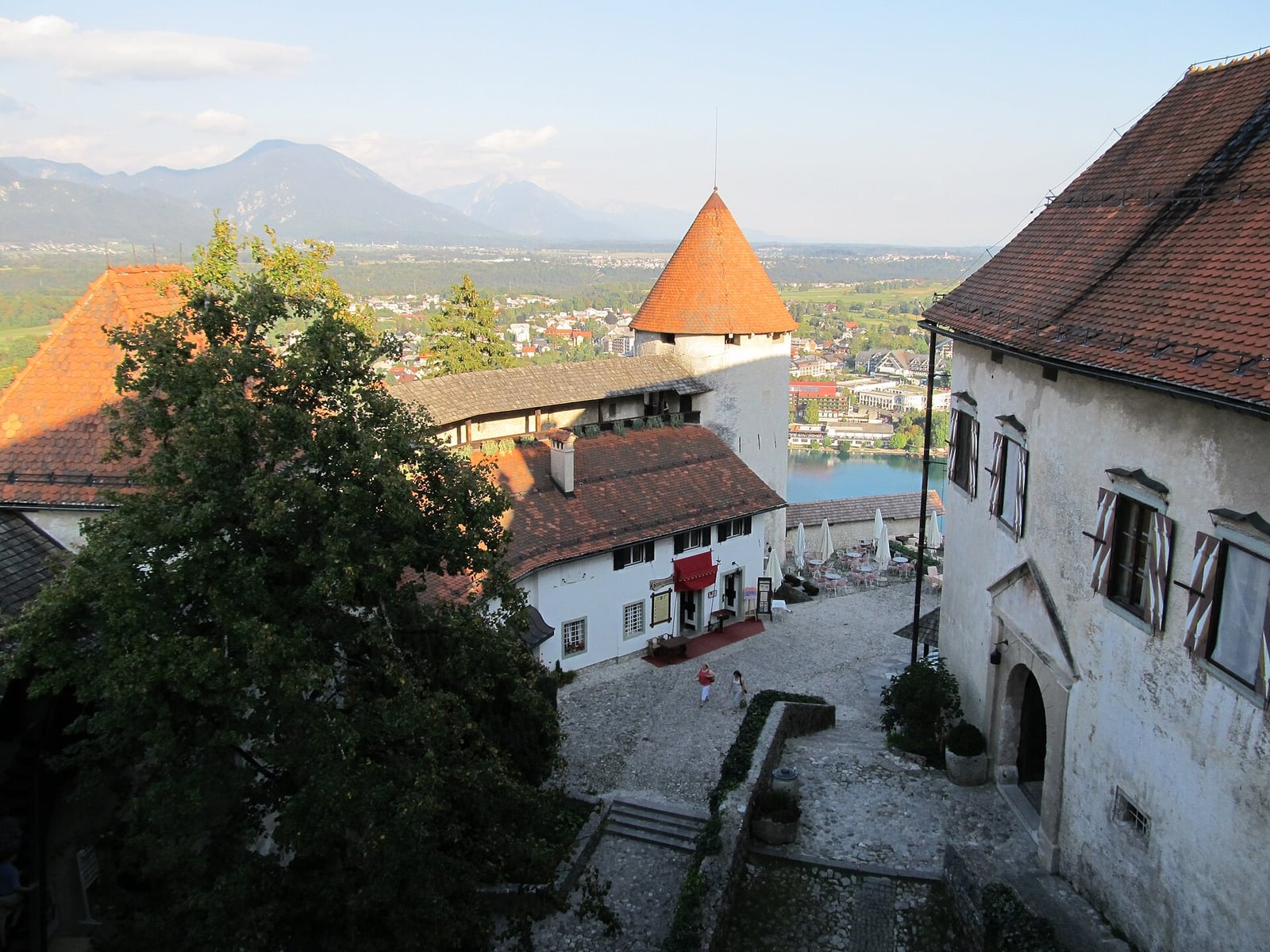
The castle’s written history reaches back to a 1011 donation record. Its connection with the bishops of Brixen helps explain why this was a place of administration and power, not merely a romantic residence. The buildings visible today contain later rebuilding and restoration, so a visit is best read as layers of use rather than a frozen scene from a single century.
Use the courtyards to orient yourself before moving inside. The lower and upper levels give a sequence between working spaces, collections and views. The museum places Bled and its surroundings in a longer human story, while the chapel brings another kind of interior into the visit. Even if you primarily came for the panorama, spend time with one collection or craft display; it gives the view below a history instead of leaving it as background.
Find Slovenia’s language story in the printing works
The printing works provides a particularly tangible link to Slovenian cultural history. Its replica of a Gutenberg press shows printing as a physical process rather than a line in a chronology. The castle records that Primož Trubar visited in June 1561; his importance to the development of the Slovenian literary language gives the workshop a context beyond souvenir production.
If a printing demonstration or hands-on option interests you, ask what is operating during your visit and allow time to watch the process. It is the kind of small, specific experience that can stay with you longer than another photograph of the island. For children or travellers less interested in a long museum sequence, choosing one craft-focused stop can also make the castle more engaging without trying to inspect every room.
Finish with a view, not a race for another attraction
Our editorial lake-day shape is crossing and island, a shore meal, then castle, with the order reversed if confirmed opening or boat arrangements favour it. Think in generous blocks rather than connecting two advertised attraction durations. A late afternoon can be devoted to the castle terrace or a return shore walk instead of a third paid excursion. Keep the time of your final bus, dinner booking or boat arrangement visible.
If only one visit fits, use the rest of the day to see its relationship with the shore. After the island, walk to a different lake angle and look back at where you have been. After the castle, return to water level and let the panorama become a place you can walk through. This exchange between distant view and close experience is what makes the pair rewarding, even across two separate days.
| Choose | Main appeal | Allow separately |
|---|---|---|
| Island | Crossing, church and pilgrimage atmosphere | Boat arrangements and steps |
| Castle | History, workshops and elevated panorama | Approach, museum time and descent |
| Both | Two complementary perspectives | A proper shore break |
An overnight stay can separate island and castle without adding travel from Ljubljana. Compare Old Bled House with other town options and check the walk back after dinner.
Sources & editorial notes
Access, timetables and operating conditions can change. Follow the linked official notices before travelling.
Sources & editorial notes →