
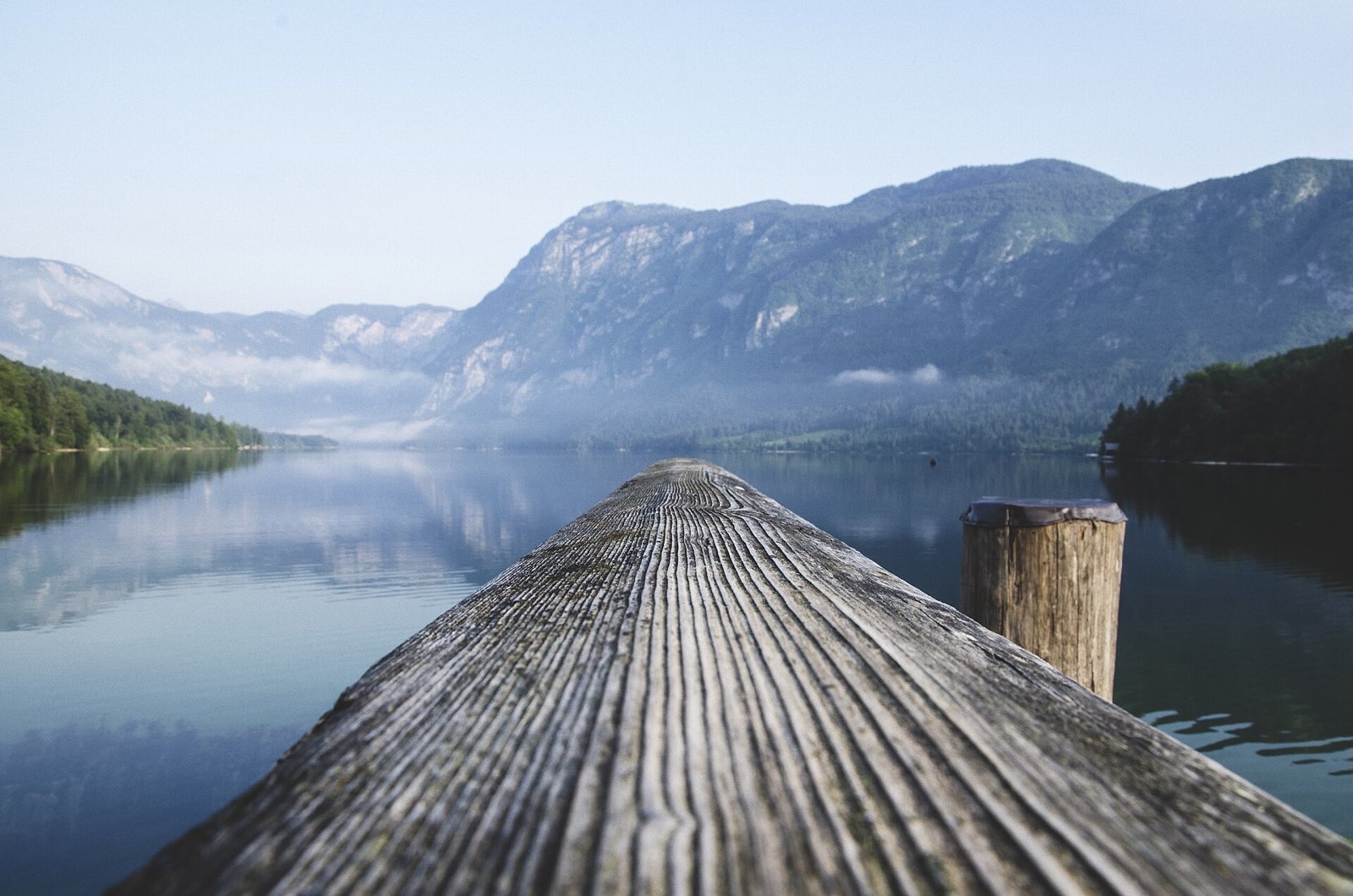
Bohinj is not another angle on Bled. The lake opens into a broad glacial basin beneath the Julian Alps, with settlements concentrated around its approaches and wooded slopes framing much of the water. Where Bled gathers an island, castle and town into one compact composition, Bohinj asks you to choose a shore, a valley or a mountain excursion. That difference is the beginning of a better day trip.
A first visit can be simple: arrive at Ribčev Laz, understand the bridge and lake outlet, visit the church when open, then choose a shore walk or a confirmed boat journey. A more active day might focus on Stara Fužina and Mostnica, or on Ukanc and Savica. Trying to include every named attraction is possible only by giving up the time that makes each place interesting. These routes are editorial suggestions; exact departures and operating conditions belong to the current official sources.
Read the lake from east to west
Lake Bohinj occupies a glacially formed basin. The official destination description gives a length of approximately 4.1 km and a shoreline of 11.35 km. Those figures explain why the lake feels different from a quick stroll between viewpoints: the complete shoreline is a substantial walk, not a spare-hour addition to a waterfall and a mountain ride.
Use the east–west shape to organise your choices. Ribčev Laz gives a recognisable starting point beside the bridge and the Church of St John the Baptist. Ukanc sits at the western end and connects with different outings. Decide whether your day is about staying in one area or moving between the two. Crossing the lake by boat can become the main journey, rather than a decorative extra squeezed into a road itinerary.
Ribčev Laz: bridge, church and first lakeside pause
Begin with the stone bridge and church rather than immediately looking for another transfer. The Church of St John the Baptist is part of the village landscape, not merely a marker behind the familiar photograph. Official visitor information dates the building to before 1300 and highlights medieval wall painting. Its exterior and interior invite a slower look at the cultural landscape beside the water.
When the church is open, allow a separate visit rather than assuming you can step inside at any moment. Seasonal hours and maintenance may affect individual spaces; the bell tower should not be promised as part of a routine stop. Even if the interior is unavailable, the bridge, lake outlet and shore make a coherent introduction. Have a drink or a meal before committing to a longer walk, and identify your return bus stop while everything is still unhurried.
Stara Fužina and the working Alpine landscape
Stara Fužina makes sense if you want the day to include village life and cultural history, not just water. It is the named starting point for marked routes towards Mostnica and Voje. The local museum offering also introduces the region’s pastoral heritage: the Alpine Dairy Farming Museum is a way to understand the relationship between settlements, grazing and the mountain landscape beyond the village.
Choose this area as a focus rather than a brief detour before racing to Ukanc. A village walk, a museum visit during confirmed opening and lunch can anchor a satisfying day with only a short waterside component. If travelling with mixed interests, this allows one group to enjoy culture and food without committing everyone to the full gorge or valley route. Check the actual distance from your arrival stop and keep the return connection in view.
If you are starting in Ljubljana and want transport organised, compare the researched combined trip. Its shorter stops are a different experience from dedicating a whole day to one Bohinj village.
Mostnica: choose the gorge or the longer Voje valley
The Mostnica route introduces another landscape: river-cut rock, pools, forest and the opening of the Voje valley. Official guidance starts the marked approaches in Stara Fužina, with options from the village centre, St Paul’s Church or the Vorenčkojca parking area. The short gorge visit and the longer valley outing are distinct choices. Do not interpret the presence of both on a map as a recommendation to do everything.
For the gorge, the destination page describes paths on both sides that allow a circular walk and a paid entry section. Beyond it, the route can continue past Koča na Vojah into the valley towards the Mostnica waterfall. That longer version takes a meaningful part of the day; it should replace another major outing rather than sit between Savica and a cable car. Choose a turnaround point in advance, taking the group’s walking pace and return transport into account.
Ukanc: let the western shore become the destination
Ukanc works as a western-shore focus for people who prefer to make one end of the lake their base for several hours. The panoramic boat lands within the Bohinj campsite, so identify the exact landing rather than assuming every roadside lake stop is the pier. A shore pause here has a different rhythm from an itinerary built around driving through several villages.
This area also makes you confront a useful choice: remain close to the water, continue towards Savica, or consider Vogel as a separate mountain outing. Combining all three leaves little time to appreciate any of them. If your boat or bus arrival is later than expected, shorten the programme at the western end rather than turning the return into a race. Carry the current return options before moving away from the landing.
A boat-and-walk day with a clear return
The official panoramic service links Ribčev Laz and Ukanc with electric boats named Zlatorog and Triglavska roža. It offers one-way and return journeys, making it possible to combine a crossing with a shore walk. That is a particularly good way to make the journey itself the day’s main experience, rather than using the boat only to tick a box.
Build the plan from the last acceptable return. A one-way ticket plus a walk requires enough daylight and walking time; a return ticket requires a confirmed sailing and attention to capacity. The operator notes that wind, fog and water levels can affect service. We therefore suggest two versions: a confirmed return crossing with short walks at each end, or one crossing followed by a deliberately planned walk back. Neither version should depend on an assumed extra sailing.
A base convenient for your onward bus can simplify an independent Bohinj day. Compare the actual address and arrival stop rather than judging only the property name.
Savica: a real stair climb, not a roadside waterfall
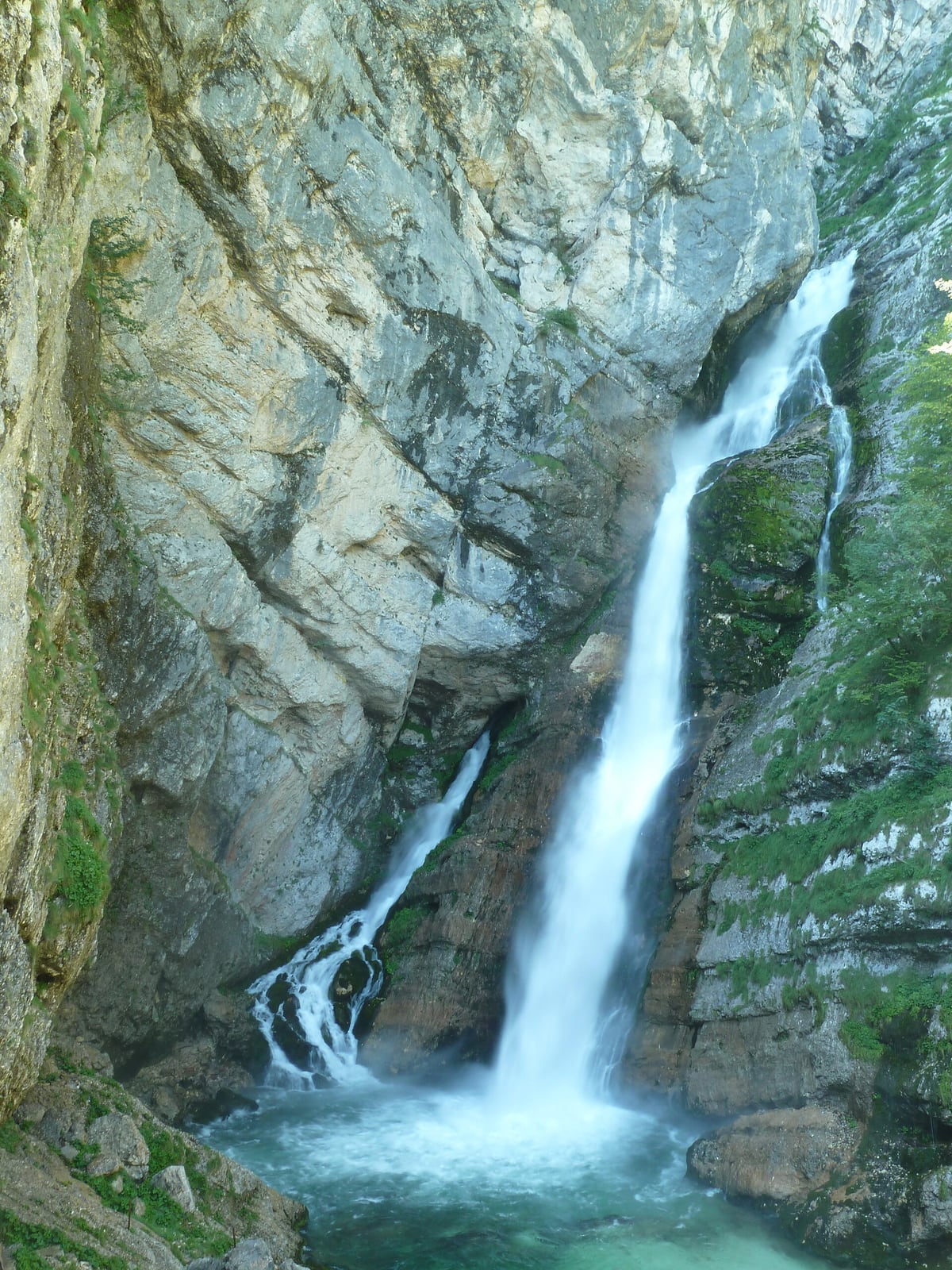
Savica is an additional visit beyond the lake, approached from the western end. The official destination page describes a path from the parking area that continues on foot and includes numerous steps. The spectacle is framed by the walls of Komarča; the interest lies in arriving at the waterfall’s viewing area, not in treating the pool below as a place to swim.
Choose it when your group wants the climb and you can reconcile the approach with the return journey. The route is not suitable for pushing a stroller or using a wheelchair on the stairs, and swimming at the waterfall is prohibited. That makes Savica a specific choice rather than a universal addition to every Bohinj day. If steps are unwelcome or the transfer is awkward, a longer lakeside pause can be the better option without making the visit incomplete.
Make lunch part of understanding Bohinj
Local food gives the valley another dimension. The official culinary overview highlights Bohinj cheese, pungent mohant, trdinka corn flour and dishes such as žganci. Rather than ordering the same generic lunch you could eat anywhere, use the menu to ask how local dairy products or ingredients feature in a dish. Mohant in particular is a deliberate flavour choice, not a mild cheese to order without curiosity.
The destination’s Bohinjsko/From Bohinj scheme is a practical starting point for finding producers and restaurants connected with the region. It is more useful than inventing a personal recommendation for a place we have not inspected. Plan lunch near the area you are visiting; crossing the valley for a meal can consume the time saved by a simple route. In quieter seasons, check opening directly and carry something for the interval between transport connections.
Bohinjska Bistrica is a gateway, not the lakeshore
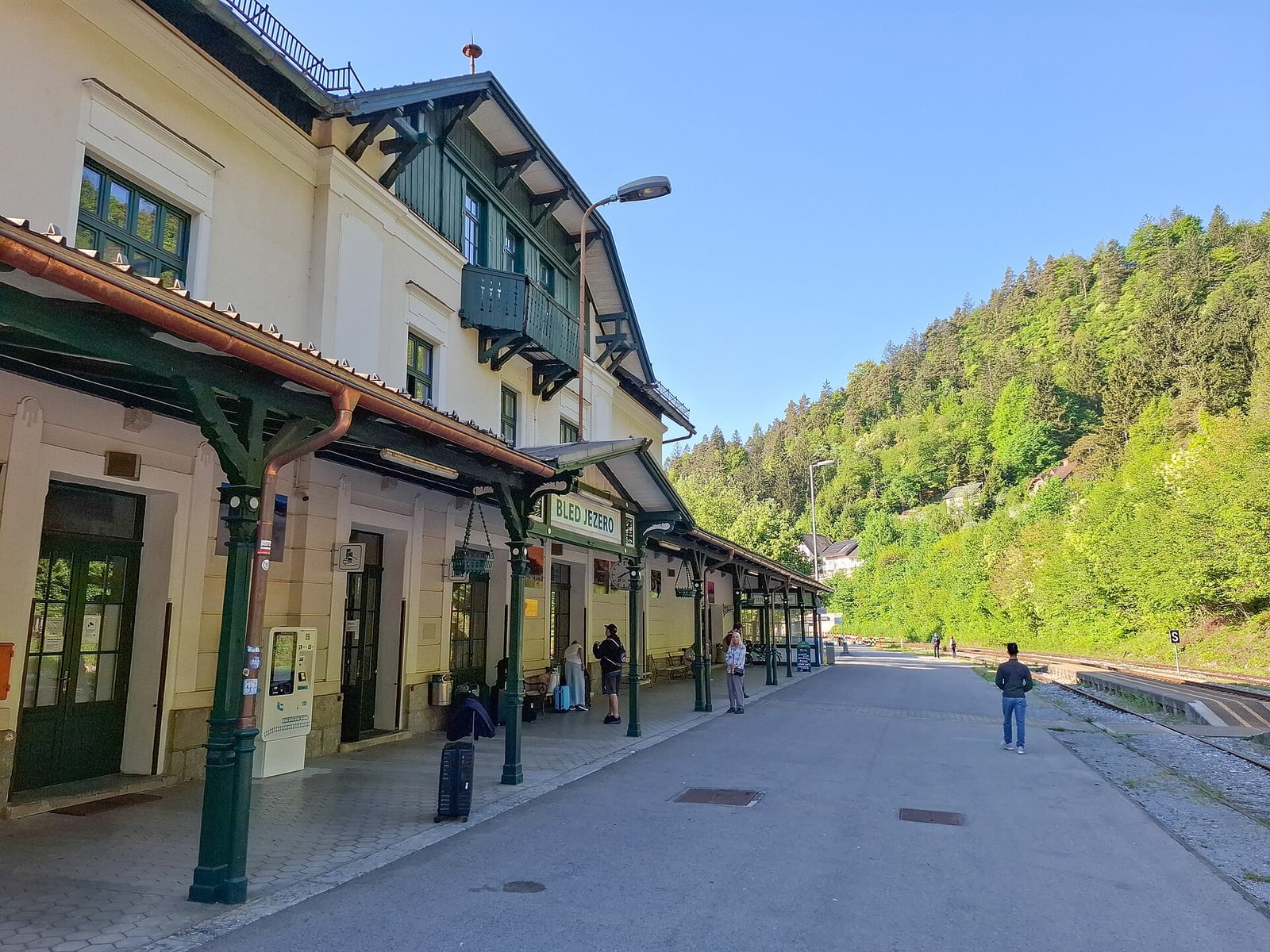
When reading bus and rail results, distinguish the wider destination from the lake itself. A journey to Bohinjska Bistrica does not automatically deliver you to the bridge at Ribčev Laz or the landing in Ukanc. Trace the final leg to the place you actually want to begin, and do the same in reverse for the way back to Bled. Station and village names matter more than a short headline journey time.
For a car-free visit, choose a current outward service and a return you can realistically reach from your chosen area. Seasonal organised transport and regular buses are not interchangeable. By car, use Bohinj’s current parking and mobility guidance and select a parking area that serves the day you planned. A parking location useful for one trail can be inconvenient for a boat journey that finishes elsewhere.
Three satisfying versions of the day
For a gentle first visit, build the day around Ribčev Laz, the church if open, a short shore walk and lunch. For a journey across the lake, replace the longer village visit with a confirmed boat crossing and a carefully chosen return. For an active river day, start at Stara Fužina and give Mostnica the space it needs. These are alternatives, not three stages of one suggested schedule.
If a combined guided day is what your travel arrangements allow, choose it with clear expectations: time at Bohinj will be one part of a wider itinerary. If you have several nights at Bled, the stronger independent choice is usually to protect a whole day and leave Vintgar elsewhere in the stay. Use the wider Bled activity selection only for another open day, keeping Bohinj’s own geography at the centre of this one.
Keep a full Bohinj day if the lake is your priority. Compare other activities for a separate date rather than stacking several fixed bookings into the same excursion.
Sources & editorial notes
Access, timetables and operating conditions can change. Follow the linked official notices before travelling.
Sources & editorial notes →