
Bled is easy to put on a map and surprisingly easy to misread when booking the last part of a journey. Lesce-Bled and Bled Jezero are not two names for one station. A coach to Bled does not deliver you to every lakeside hotel, and an airport connection to Ljubljana may send you away from the lake before you travel toward it again. The best choice begins with the address where you will actually sleep.
Use this guide to assemble the journey in layers: the long-distance arrival, the local last leg, your days around the lake and one or two excursions. We identify the decisions that stay useful when timetables change rather than publishing a schedule that will quietly expire. Distances attributed to operators are planning context; suggested arrival and excursion sequences are editorial advice, not guaranteed connections.
Start with the last kilometre
Before buying the intercity ticket, locate your accommodation and ask which stop or station its reception recommends. A room near the town centre, a hotel by Bled Jezero and a village stay in Ribno create three different arrivals. The phrase near Lake Bled does not tell you whether your final walk is flat, uphill, on a practical luggage route or several kilometres long.
Compare the total journey rather than the arrival time printed next to the word Bled. Include a station transfer, the wait for a local bus, a taxi you may need to arrange and the walk to reception. A slightly later arrival at the useful side of the lake can be better than an earlier train that leaves an awkward last leg. This matters especially after dark or with children and luggage.
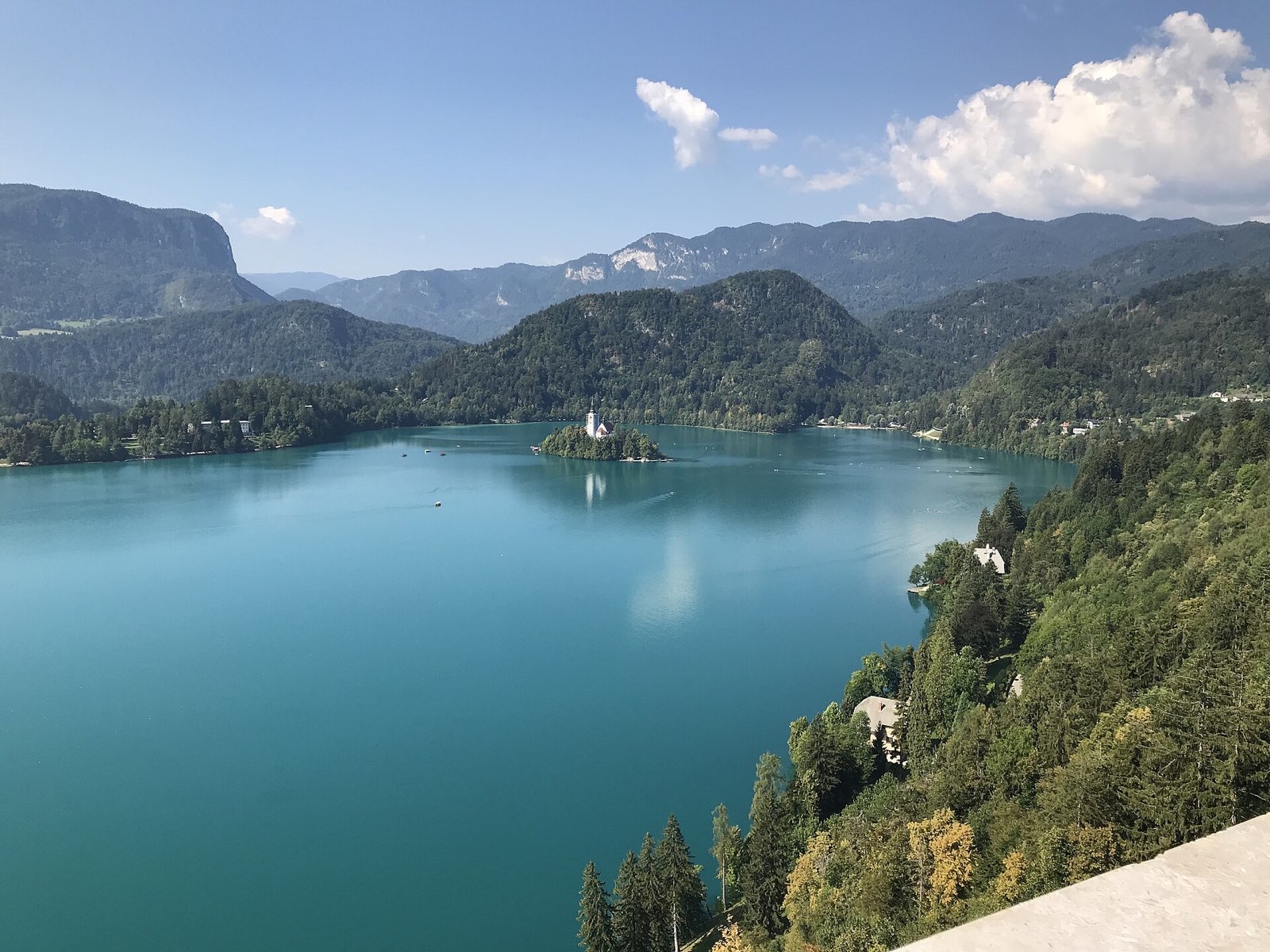
Ljubljana to Bled by bus
For a straightforward city-to-lake visit, compare the current bus results in Arriva’s journey planner. Search your travel date, then examine the stop name, departure point and return separately. If you are sleeping in Bled, ask the property whether the main bus station or another served stop makes the better arrival. Do not choose a passing stop solely because it appears closer on a straight-line map.
For a day trip, choose the return before filling the day with attractions. Give yourself an earlier usable return option rather than designing an itinerary that depends entirely on the final departure. A morning at the lake, lunch and one principal attraction is a more resilient independent plan than combining the island, castle and a timed gorge entry before the bus home.
If your priority is seeing Bled and Bohinj with transport arranged, compare the verified multi-stop excursion. Check the time at each place and optional admissions: an organised day trades independent time for simpler logistics.
Lesce-Bled: useful railway access with an onward leg
Slovenian Railways describes Lesce-Bled as one route to the lake, followed by a local bus, bicycle or a walk of approximately 4 km. The key point is that the railway arrival is not on the central waterfront. With a suitcase, a summer afternoon or limited walking tolerance, treat the local connection as part of the booking rather than an afterthought.
Look up the train first, then search the onward bus for a realistic arrival window. If the connection is awkward, compare a prearranged taxi or a different rail route rather than forcing a rushed transfer. The operator’s 4 km figure gives the scale; it is not a recommendation that every visitor should walk it with luggage. On departure, reverse the calculation and protect the train connection with a margin.
| Arrival point | What follows | Best decision before booking |
|---|---|---|
| Lesce-Bled | A separate trip toward the lake | Choose bus, taxi or a deliberate walk. |
| Bled Jezero | A western-side local arrival | Match the station to your hotel and onward path. |
| Bled bus stop | A walk or local transfer | Confirm the exact stop with the property. |
Bled Jezero: the western side changes the journey
Bled Jezero is a separate station on the western side, above the lake. The railway operator describes an approach via Jesenice and a transfer onto the local route. Its promotional page also mentions certain direct services; use the current timetable for your actual date instead of treating that as an everyday promise. A change at Jesenice can be entirely sensible when it delivers you to the side you need.
This arrival suits a western-shore stay particularly well. Hotel Triglav’s own contact page places it at Kolodvorska 33 and describes Bled Jezero as close by. If your accommodation is in town, however, do not confuse a station near the lake with a station near your front door. Confirm the onward walk or transfer before deciding that the scenic railway is the easiest luggage option.
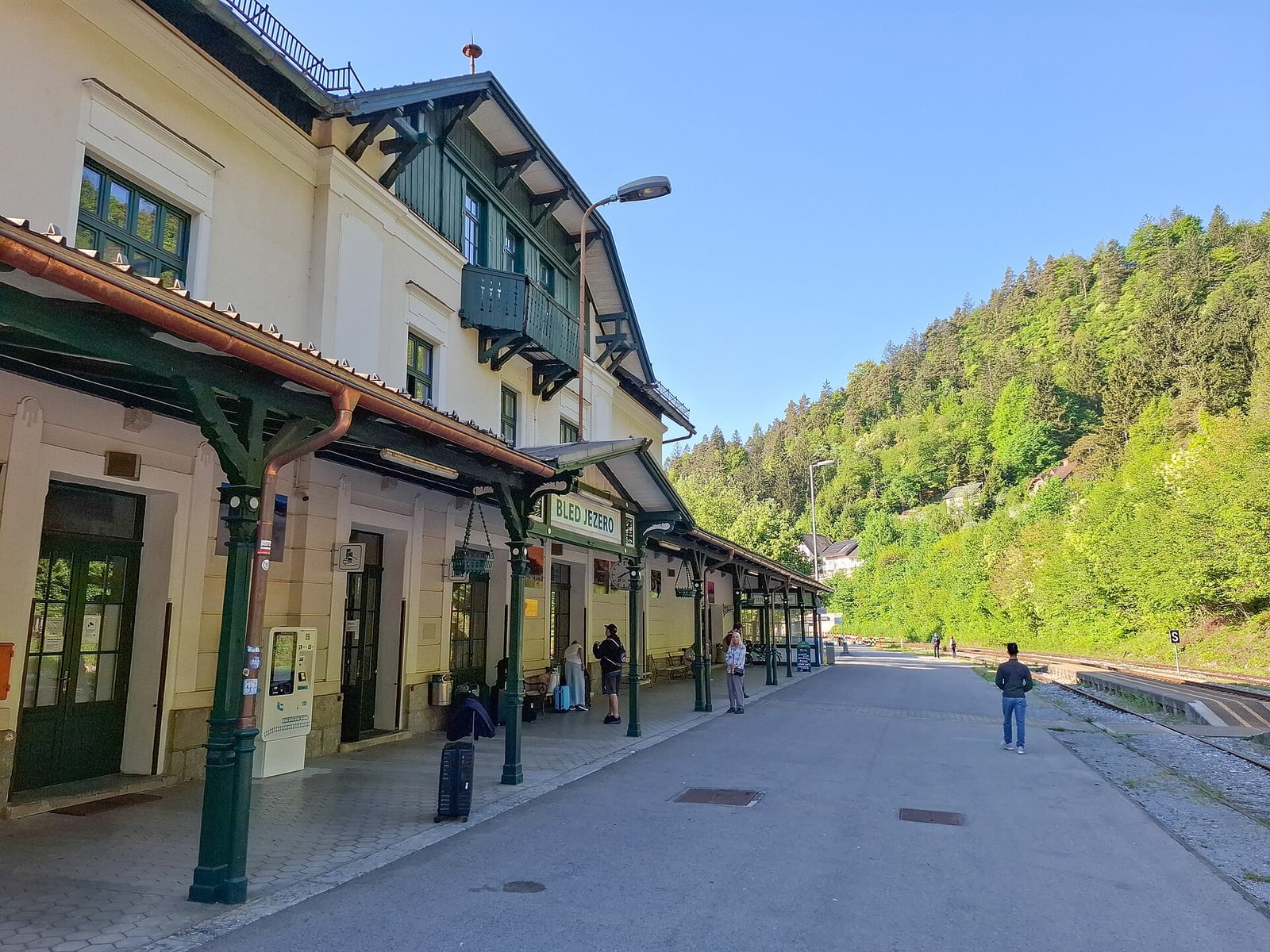
A western-side railway arrival can work naturally with this base. Confirm your arrival instructions and room category with the property; the station location does not guarantee every path is step-free.
From Ljubljana Airport: compare routes, not assumptions
The airport’s official public-bus page is the starting point for identifying services and operators. Then search the actual onward route to Bled. Do not assume that a bus marked Ljubljana is a direct lake connection: a journey into the city can require another transfer. Equally, do not assume a direct option operates at the time your flight lands simply because it appears on a general transport page.
When comparing a shuttle or taxi with public transport, use the final accommodation address and include the whole party and luggage. Ask where pickup occurs, how flight delays are handled and whether the quoted service reaches the property or a central stop. After a late flight, an arranged final leg may be worth more than an ambitious sequence of public connections. No fixed airport transfer duration is promised here.
Moving around Bled without a car
A town-based or carefully chosen lakeside stay lets you keep the core Bled day on foot: shore, meal stop, island landing and a separate castle approach. You do not need to move a car between every view. The useful planning question is how far you want to walk at the end of the day, when the outward stroll is no longer an attraction and you simply want to return to your room.
Tourism Bled lists seasonal buses, a tourist train, taxis, boats and the Tinček electric minibus among local options. These have different purposes and operating arrangements. In particular, a seasonal sightseeing service is not a guaranteed year-round commuter connection, and Tinček is described primarily for older people and users with mobility impairments. Choose the appropriate service rather than treating every icon on the map as interchangeable transport.
With a car: park for the day you are having
Bled’s municipal parking information distinguishes central spaces, lake-side locations and car parks run by other operators. P03 Centralno parkirišče, Mala Zaka and Velika Zaka serve different plans; a space near town is not the same decision as parking for a western-shore walk. Choose the area you intend to explore before circling in search of the nearest available gap.
Read the sign at the actual car park for the current tariff, payment proof and maximum stay. A convenient short-stay space may be the wrong choice for an island trip plus lunch. The municipal site describes both physical payment proof and electronic methods; follow the instructions for the method you use. This guide deliberately avoids reproducing prices and live space counts, which can change independently of the route advice.
Vintgar is a transport chain, not just an entry ticket
The current official visitor guidance sends private cars to the designated LIP P1 parking hub rather than the Visitor Centre. It also separates the Bled–LIP connection from the LIP–Visitor Centre shuttle. When planning independently, identify both legs and the return arrangement. The attractive-looking gorge distance does not include your journey from Bled or eliminate the route after the one-way exit.
For an editorial itinerary, give Vintgar its own half day and avoid placing another fixed booking immediately afterwards. A commercial transfer-and-tasting product may have its own pickup and return terms, so compare that product as a complete arrangement instead of assuming it follows every detail of an independent visit. The time slot, pickup place and end point all need to agree.
For a car-free visit, compare the verified product against organising the official connections yourself. Read its current admission and return inclusions carefully; the transport arrangement belongs to that exact product.
Bohinj: name the place, then find the connection
Bohinj is an area as well as a lake destination. Choose your intended lakeside stop or village before searching transport; a result for the wider area is not automatically the end point of your walk. Use the current regular-bus planner and Bohinj’s official mobility information together. Seasonal organised transport and regular bus routes can have different ticket and operating arrangements.
A full-day editorial plan leaves time to explore one lakeside area and return without rushing. Add Vogel or Savica only when their access and the extra transport fit that day. If you sleep in Bled, keep the final usable return visible on your phone rather than relying on an assumed evening frequency. The separate Bohinj guide helps decide what to leave out as well as what to add.
Protect arrival and departure days
On arrival, make the first paid visit optional until you know when you can leave your bags and how long the final leg takes. A short shore walk is an excellent first activity precisely because it can expand or contract. Save the more complicated excursion for a day that begins in Bled, with the right shoes, the booked ticket and a clear return plan.
On departure, work backward from the flight or reserved train, including checkout, retrieval of stored luggage and the local connection. Do not put a distant excursion into the morning simply because its headline duration looks short. The day builder orders activities and generates a dated accommodation search; it does not monitor traffic, flight disruption or missed buses. A calm buffer is part of a good itinerary, not wasted holiday time.
Sources & editorial notes
Access, timetables and operating conditions can change. Follow the linked official notices before travelling.
Sources & editorial notes →